
THRIFT STORE SEWING
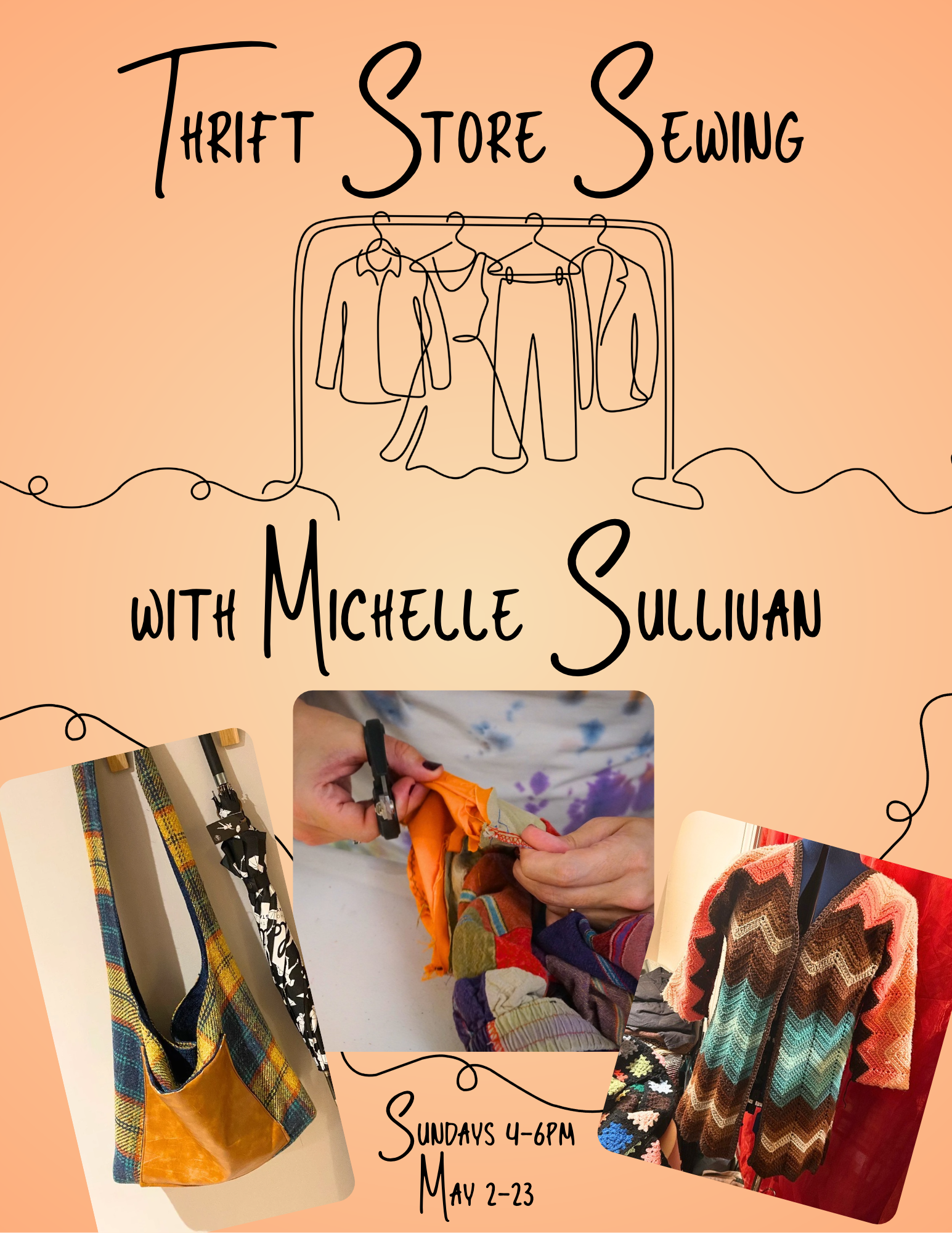
THRIFT STORE SEWING
TAUGHT BY MICHELLE SULLIVAN
FOUR SUNDAYS, MAY 2-23, 4:00-6:00PM
SLIDING SCALE $200-$275,*
Are you a thrift store fan? Do you have a growing pile of clothes that were too good to pass up, but don’t fit quite right? Do you have a stash of vintage linens that you would love to work into your daily life, but you aren’t throwing a formal tea party any time soon or ever? Well, this is your moment!
In Thrift Store Sewing with Michelle you will:
Learn how to make simple alterations on thrifted garments to make them feel like they were made especially for you.
Practice up-cycling thrifted textiles into bags, clothing, or whatever else you can imagine.
Explore how to tell whether a garment is worth altering or if you should leave it for the next thrifter.
Learn how to thrift quality sewing supplies for pennies.
Bring your own sewing machine or make arrangements to use a thrifted machine from the instructor. Whether you are just starting your sustainable sewing journey or are a seasoned home sewist, this class will provide instruction, support, and a social atmosphere to bring your ideas to life!
To register, please email by clicking the button below or emailing programs@nohoarts.org directly and include your name, address, and phone number.
Payment can be made by mailing a check made out to NCFA to PO Box 366, Northampton, MA 01061 or by Paypal, Venmo, Apple Pay, Pay Later or Credit Card by clicking the link below.
*Payments on the upper end of the sliding scale help support our continued commitment to accessibility, including sliding scale models and the NCFA Community Fund.
Michelle Sullivan is a lifelong home sewist with a special interest in garment history, engineering, design and construction. Michelle holds a BA in Theater from UMass Amherst, and continues to enjoy a 29 year career as an educator in Hampshire and Hamden counties.
Jeannie Donovan is an exhibiting painter and papermaker with an MFA in Visual Design, who has taught drawing and painting to students of all ages for over 25 years.
SUPPLIES:
Drawing Materials
Sketch book (9 x 12”) white drawing paper pad (no newsprint)
Drawing pencils: 2H, F, 2B, 4B, and pencil sharpener
1 or 2 kneaded rubber erasers
Watercolor Materials
Watercolor pad (9 x 12”) rough, textured surface, cold pressed (not real expensive brand, student grade)
1 sheet: Full size watercolor paper, 22” x 30”, cold pressed, 90 lb or heavier Arches, Fabriano, or other good quality brand*
Inexpensive camel hair or good student grade watercolor brushes: 1” flat; small detail brushes: #1 & #3; medium rounds #5 and/or #6; larger rounds: #10 and #12; Liner or Rigger brush: #3 or #4 for longer detail lines (Princeton Select brushes are good)
Starter watercolor kits like Koi, Reeves, Niji, Grumbacher, Cotman, or others that should include the colors cadnium red, alizarin crimson, ultramarine blue, cerulean blue, medium yellow, yellow ochre, burnt sienna, burnt umber, Chinese white, black, Payne’s gray, Hooker’s green dark, sap green; you can also buy separate tube colors and not a whole starter kit, whichever is more affordable; (be sure to buy a tube of Payne’s gray)
Small jar of white Masking Fluid or Friskit, OR masking fluid pen (cheaper)
Plastic palette with small and larger mixing wells, medium size round or rectangular
1 or 2 good size plastic cups or containers for water
16 x 20” (approximate) sheet of sturdy cardboard or masonite board)
1” roll of masking tape (or 1” roll of blue painter’s tape)
*NOTE: you won’t need the large sheet of good watercolor paper for the first class. Guild Art Supplies is a great source for materials: 1 Cottage St. Easthampton, as well as Michael’s Crafts stores, or a local store near you.